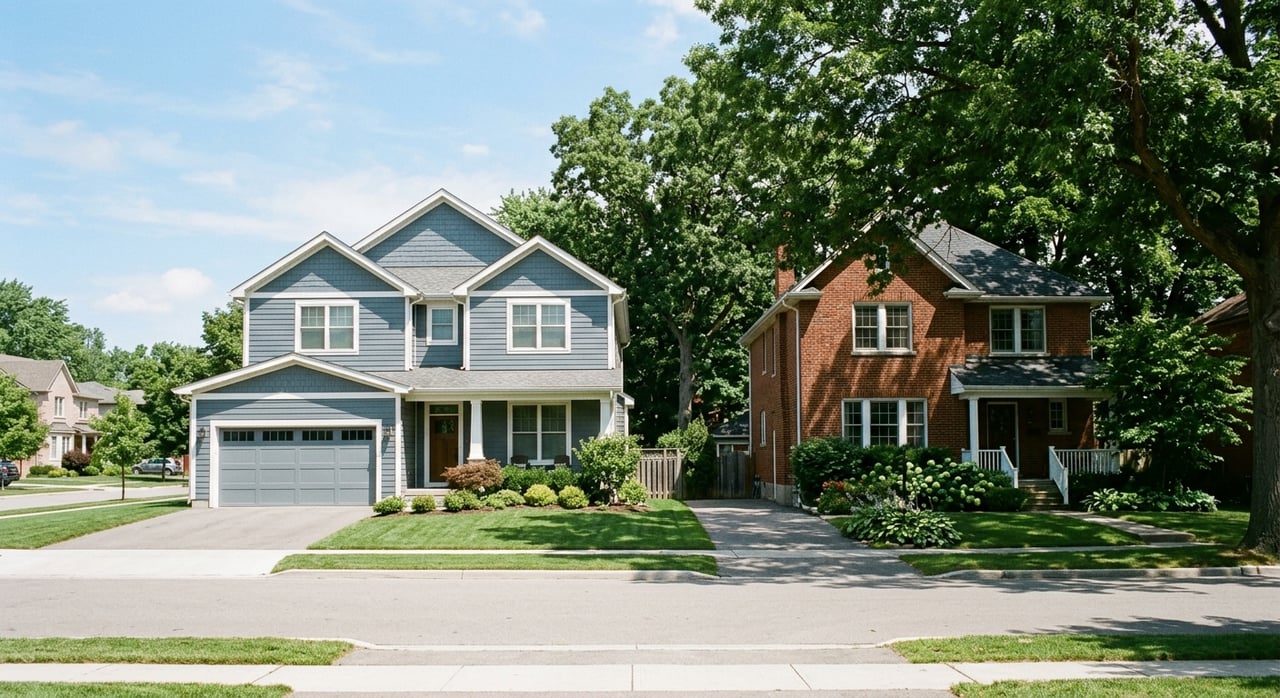
Newer Vs Established Subdivisions In Chesterfield: How To Choose
July 9, 2026
July 9, 2026
Trying to choose between a newer subdivision and an established one in Chesterfield? You are not alone. Many buyers like the idea of a fresh, planned community, but also love the character and mature feel of older neighborhoods. The good news is that Chesterfield offers both, and knowing what to compare can help you make a confident decision. Let’s dive in.
Chesterfield has a long history of subdivision growth, which gives you a wide range of choices. The city had about 146 residential subdivisions when it incorporated in 1988, and another 161 have been added since then. The oldest recorded subdivision dates to 1915, while one of the newest, Schaeffer’s Grove, was recorded in 2023.
In practical terms, “established” in Chesterfield often means neighborhoods built in the late 20th century, not just historic areas. Many of these communities reflect the suburban pattern common across the city, with single-family homes, curving streets, and a traditional neighborhood layout.
Newer Chesterfield communities are often more planned around amenities and shared spaces. City materials describing places like Wildhorse Village and Downtown Chesterfield highlight features such as trails, gathering places, lakefront park space, plazas, pedestrian areas, and outdoor community features.
That does not mean every newer subdivision feels the same. Some newer areas are more like master-planned communities, while others are more traditional residential developments. The key is to look at the specific layout, amenities, and maintenance structure instead of assuming all new construction follows one formula.
A common assumption is that newer subdivisions always come with tighter lots. In Chesterfield, that is not always true. Schaeffer’s Grove is a strong local example, with plat plans that include 110-foot-wide lots in one section and 90-foot-wide lots in another.
If lot size matters to you, it is worth comparing actual dimensions rather than relying on the age of the neighborhood. Some newer Chesterfield developments still offer an estate-style feel.
Many Chesterfield neighborhoods follow a familiar suburban pattern with curving streets and cul-de-sacs. The city’s bikeable and walkable plan notes that subdivision streets were often built for internal circulation, with sidewalks serving neighborhood movement more than a connected urban grid.
Current subdivision rules require sidewalks along most streets, although there are exceptions for some cul-de-sacs, large-lot subdivisions, and lower-density areas. That means a newer subdivision may offer more pedestrian infrastructure, but the exact experience still depends on the development.
Established subdivisions usually attract buyers who want a mature setting and a more traditional neighborhood feel. In Chesterfield, many of these neighborhoods were built in the 1970s through the 1990s, giving landscaping and street trees more time to grow in.
Chesterfield is a Tree City USA community and offers a Residential Street Tree Program for public residential streets. Even so, older neighborhoods often feel more shaded simply because their trees and landscaping have had more time to mature. That is a common pattern, though not a rule for every subdivision.
Many established subdivisions in Chesterfield reflect classic suburban design. You will often see curvilinear streets, cul-de-sacs, and homes buffered by open space, topography, or landscaping. For some buyers, that setting feels private and familiar.
If you like a neighborhood with a settled appearance, established communities may be appealing. If you prefer a more newly planned layout with newer public spaces, you may lean the other way.
One of the biggest differences between newer and established subdivisions is often not style. It is maintenance responsibility.
In Chesterfield, most residential streets were built by developers and then turned over to the city for ownership and maintenance. The city also handles snow and ice removal on city-maintained streets. But some communities include private roads, common ground, or amenity areas that are maintained at the subdivision level instead.
Newer developments can come with more formal systems for upkeep. For example, city records show that parts of Wildhorse Village include private roads owned and maintained by the development, and special business districts are used for ongoing maintenance in some areas.
The Schaeffer’s Grove plat record also shows how much can be built into a newer community from the start. It includes lots, roads, easements, and common ground, along with required agreements covering streets, sidewalks, storm sewer, sanitary sewer, grading, erosion control, streetlights, signs, water mains, seeding, and amenities.
Some established subdivisions may have fewer shared amenities and a more straightforward maintenance setup. Others still have active trustees, rules, dues, or shared common areas. Chesterfield maintains a subdivision-trustee list, which shows that subdivision-level governance is common across many neighborhoods.
This is why you should never assume an older subdivision means fewer rules, or a newer one means more. The governing documents tell the real story.
The age of the home itself can shape your monthly costs and future projects. Older homes may offer larger lots, mature landscaping, and a look you really like, but they can also come with more maintenance decisions.
According to the U.S. Department of Energy, many older homes have less insulation than homes built today, and older windows and doors can be bigger sources of air leakage and energy loss. Newer homes often have better insulation and higher-performance windows, though condition still depends on the individual property.
Instead of focusing only on whether a subdivision is newer or established, ask practical questions such as:
Those answers often matter more than the neighborhood label.
The best choice depends on how you want to live day to day. A newer subdivision may fit you well if you want a more predictable package of amenities, newer infrastructure, and a community built around shared spaces. An established subdivision may fit you better if you want a mature setting, an older tree canopy, and a more traditional suburban feel.
Try to think beyond the listing photos. Picture your routine, your maintenance comfort level, and the kind of setting that helps you feel at home.
Use this checklist as you narrow your options:
In Chesterfield, there is no one-size-fits-all answer. There is only the right fit for your priorities.
If you want help comparing subdivisions in Chesterfield without adding stress to the process, Lexi Engelbach can help you sort through the details, ask the right questions, and find the community that truly fits your goals.
Real estate should feel exciting—not overwhelming. With over a decade of experience in St. Louis, I help clients buy and sell with clarity, confidence, and zero pressure. From first-timers to seasoned movers, I bring calm guidance, sharp insight, and a little humor to every step.