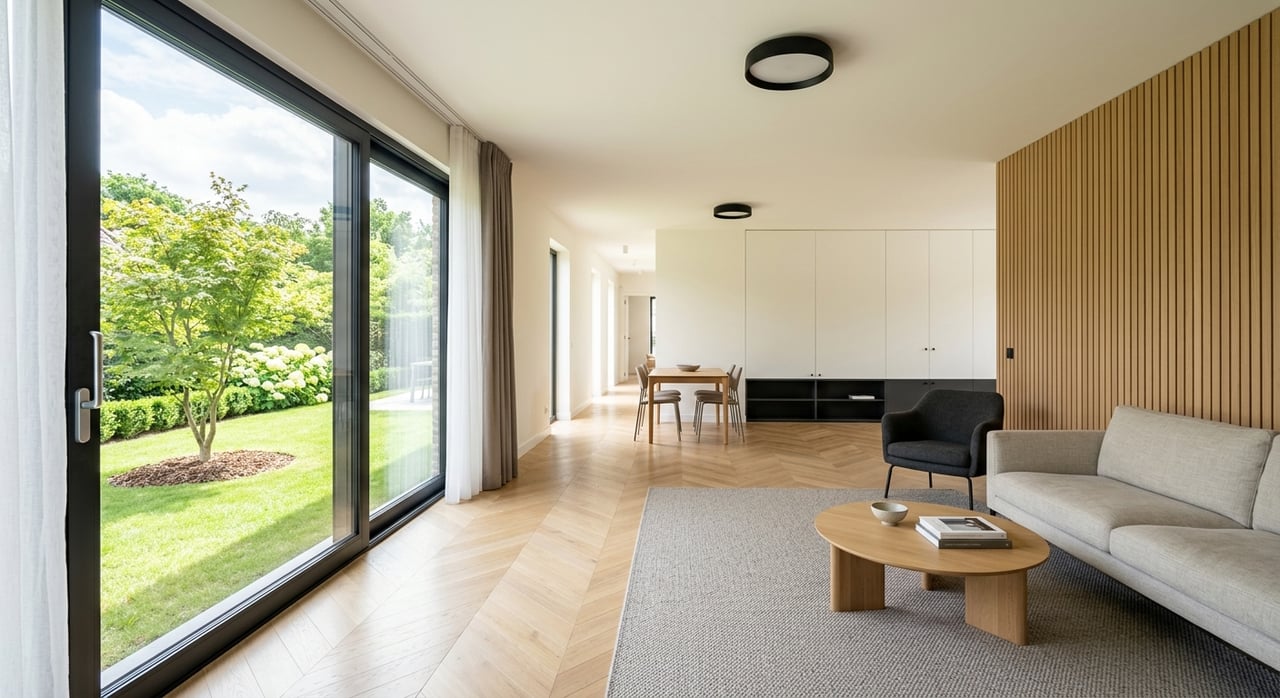
Outgrowing Your Arnold Starter Home? Options For Move‑Up Buyers
June 18, 2026
June 18, 2026
Feeling squeezed in a home that used to fit just fine? If your Arnold starter home suddenly feels short on bedrooms, storage, yard space, or flexibility, you are not alone. Many homeowners reach this point when life changes, and the good news is that you may have more options than you think. This guide walks you through how move-up buying works in Arnold, how to think about your equity, and how to plan your next step with less stress. Let’s dive in.
Arnold has a strong homeowner base, which often creates steady demand from people moving through different life stages. Census QuickFacts reports a 79.8% owner-occupied housing rate, and the City of Arnold says the city has 21,059 residents and 8,533 households. That kind of profile supports a market where many owners eventually look for a little more space or a different layout.
If you like your routine, Arnold gives you real reasons to stay local. The city notes direct access to I-55, US 61, and MO 141, plus about a 30-minute drive to downtown St. Louis and the airport. Arnold also offers nine city-owned parks with more than 400 acres and a recreation center, which can be a big plus when you want more home without giving up convenience.
If you are thinking about selling and buying at the same time, market speed matters. Recent local snapshots show Arnold as an active market with homes moving quickly, even though exact numbers can vary by source and month. Realtor.com’s April 2026 summary reported 98 active listings and a median 22 days on market, while Redfin’s May 2026 snapshot showed 61 homes sold and an average 8 days on market.
The takeaway is simple: timing matters. In a market like this, a well-prepared home sale can move quickly, but the home you want to buy may move quickly too. That is why move-up planning should start before you begin touring homes.
A move-up home does not always mean a luxury property or a dramatic price jump. For many Arnold buyers, it simply means finding a better fit for how you live now. That could mean more square footage, a different floor plan, extra work-from-home space, a larger lot, newer construction, or a different neighborhood feel.
Sometimes the best move-up option is still in Arnold. Other times, it makes sense to compare nearby Jefferson County or south-county options if you want different housing styles or more choices. The right answer depends on your budget, priorities, and how attached you are to your current routine.
Your next move likely starts with one key question: how much equity do you actually have? Home equity is the value of your home minus what you still owe on your mortgage. That equity can become part of your down payment strategy, closing costs, or cash reserves for your next purchase.
Before you assume you can tap a certain amount, it helps to get a realistic estimate of your home’s likely sale price in today’s Arnold market. It also helps to know your current loan payoff amount and any selling costs that may reduce your net proceeds. A move-up plan works best when those numbers are clear from the start.
Most Arnold homeowners have three practical ways to make a move-up purchase happen. Each option has tradeoffs, and the best fit depends on your finances, your comfort with risk, and how quickly your current home is likely to sell.
Selling first is often the simplest path. You sell your current home, use the proceeds for your next purchase, and avoid the risk of carrying two housing payments at once. This approach can make your budget easier to understand and reduce pressure during the purchase process.
The tradeoff is timing. You may need a temporary housing plan or flexible possession terms if you do not find your next home right away. In a fast-moving market, that gap can feel stressful without a clear strategy.
The Consumer Financial Protection Bureau says a HELOC lets you borrow using available equity, while a home equity loan also uses your equity as collateral. These tools can help fund a down payment or bridge your cash flow while you prepare to sell. For some move-up buyers, that creates useful flexibility.
But this option adds risk too. If your current home takes longer to sell than expected, you could be managing extra debt and added monthly payments. That is why this path works best when your numbers are conservative and your budget has room.
The CFPB defines a temporary bridge loan as a loan with a term of 12 months or less, including a loan used to finance a new home purchase when you plan to sell your current home within 12 months. This can help you buy before you sell, which may be appealing if you need a smooth transition.
The catch is that you need lender approval and enough cash flow to handle overlap. Even a short overlap can feel expensive if you are carrying two housing-related payments. This path can work, but it needs careful planning.
There is no one-size-fits-all answer, but a few questions can quickly narrow the field. The strongest plan usually comes from balancing convenience with financial comfort.
Ask yourself:
If the answer to that third question is no, selling first may be the safer route. If you have strong equity and cash reserves, a buy-first option may be worth exploring.
Move-up buyers often focus on price and forget about process. In Missouri, coordination matters because the timing of your sale proceeds and your next purchase can affect everything from your down payment to your moving schedule.
Missouri real estate rules allow a title company, escrow company, lender, or attorney to administer the closing. At the same time, the broker is responsible for a complete and accurate closing statement being delivered to both buyer and seller. In real life, that means your lender, title company, and agent need to stay in close sync so money moves when it should.
Missouri also handles disclosure duties in a specific way. State law requires disclosure of adverse material facts that are actually known or should have been known, but the transaction broker statute says there is no duty to conduct an independent inspection or investigation. For you as a seller, that means honest, accurate disclosures are important, especially if you want a smoother transaction.
Some disclosure items are especially relevant depending on your home. Missouri law requires disclosure if a property contains a solid waste disposal site or demolition landfill. And for most homes built before 1978, federal law requires lead-based paint disclosures, including known information, available reports, a warning statement, and a 10-day inspection or risk-assessment window for buyers.
These details may not change your decision to move, but they can affect your timeline. Gathering records and preparing disclosures early can help reduce last-minute surprises once your home hits the market.
For some households, the goal is more space without changing much else. If that sounds like you, staying in Arnold may be the easiest transition. You keep the highway access, parks, recreation amenities, and the routines you already know.
If school continuity matters to your household, Fox C-6 may also factor into your decision. The district says it serves Arnold and portions of Barnhart and Imperial, covers about 75 square miles and roughly 65,000 residents, and includes 11 elementary schools, 4 middle schools, and 2 high schools. That makes staying within the same district footprint a realistic option for many move-up buyers.
On the other hand, your best fit may be just outside city limits. If you want a different lot size, newer construction, or a different neighborhood setting, comparing Arnold with nearby Jefferson County and south-county choices can widen your options. You do not have to assume your upgrade must happen in one exact spot.
The smoothest move-up sales usually start with a plan, not a panic search. When you know your likely sale price, estimated proceeds, financing options, and timing preferences, you can make better decisions and avoid rushing.
A practical game plan often looks like this:
That kind of preparation can make a fast-moving market feel much more manageable. It also helps you move with confidence instead of guessing as you go.
If you are outgrowing your current home, the next step does not have to feel overwhelming. A smart move-up strategy starts with clear numbers, realistic timing, and a plan built around your life. When you are ready to map out your options in Arnold and nearby areas, connect with Lexi Engelbach for a low-stress, personalized consultation.
Real estate should feel exciting—not overwhelming. With over a decade of experience in St. Louis, I help clients buy and sell with clarity, confidence, and zero pressure. From first-timers to seasoned movers, I bring calm guidance, sharp insight, and a little humor to every step.